About

Monday, September 14, 2020

Read an excerpt from THE LAST KING England: The First Viking Age (The Ninth Century Book 1) by M J Porter @coloursofunison @maryanneyarde


THE LAST KING

England: The First Viking Age (The Ninth Century Book 1)

By M J Porter


They sent three hundred warriors to kill one man. It wasn’t enough.

Mercia lies broken but not beaten, her alliance with Wessex in tatters.

Coelwulf, a fierce and bloody warrior, hears whispers that Mercia has been betrayed from his home in the west. He fears no man, especially not the Vikings sent to hunt him down.

To discover the truth of the rumours he hears, Coelwulf must travel to the heart of Mercia, and what he finds there will determine the fate of Mercia, as well as his own.


EXCERPT

AD874


I taste it on my lips, and over the salt of my sweat.


And I scowl. It’s not a flavour I wish to get used to. All the same, I know what it is without a second thought.


My seax glistens slickly in the dull light, the gleaming claret reminding me more of an exotic wine from the south than the lifeblood it truly is. The double headed-eagle impeccably depicted on the handle seems to wink at me, as the eyes fill with the ruby mixture.


Not that I focus on it for more than the time it takes me to blink.


This horde feels as though it’ll never stop, and I’m determined to end the lives of as many of them as possible. Such slaughter doesn’t bring me joy, but this is my skill. I wield it because I must.


My weapon, so sharp it cuts through byrnies as though they’re no more than spider webs, is busy today.


They come against my force, as small as it is, and they mean to annihilate us. But we will not go without making our sacrifices to their god of war.


My seax sweeps effortlessly along the abruptly exposed throat of my enemy, the realisation of what’s befallen him only reaching his eyes as he falls to the ground. I step over him, already sighting my next enemy.


This one swirls an axe in his left hand, as I reveal my bloodied teeth. His entire body recoils, almost a backward step. Before he can consider his move, I’ve sliced through his belly, the gut threatening to spill at my feet. I dismiss him and move onto the next man.


The ground beneath my feet squelches with each step, slick, more like a flooded river than the solid ground it should be.


It’s awash with the dead and wounded, the long shield wall that tried to defeat us long since disintegrated to small spots of desperate one to one fighting. This is my favourite part of any battle.


I turn, noting the angle of the sun, the brush of the breeze against my slick body, breathing deeply through my nose. This is not my first battle. Far from it.


I hear the cries of those boys who thought themselves men, and equally of those men who’ve found they are but boys when their lives are threatened.


I scorn them. They’re not worthy of my attention.


Quickly, I reach for my weapons belt, keen to know that all is where it should be. My hand brushes over the sharpened edges and deadly blades that make a home there. For now.


Satisfied, I pick my next target, a tight knot of men fighting not five steps away, and move forward.


I don’t hurry. Not this time. Neither, as I’ve seen others do, do I check the weight of my weapon, or test the strength of my arm as I consider my next move. Instinctively I know that all is well.


They’ll not fail me. They haven’t before.


The sun is high above my head, few clouds to be seen, other than high up, more wisps than anything substantial.


This battle has been long. It began with the streak of fire across the eastern sky, and I don’t foresee it ending other than when that same stripe sinks below the western horizon.


Those who met their death in the first wave of the assault will be cold and stiff by then, the heat of the sun of no help to them.


Those yet shivering with their mortal injuries will watch for the flashes of disappearing gold with fear. They’ll not see it rise again.


I simply mark it with detachment. There are more warriors to kill.


There are always more enemies to kill.


My seax arm sweeps to the right. I would sooner not kill a man who doesn’t know I’m there, but he should be paying more attention.


The wound along the back of his neck opens up with unsurprising ease, and I notice how my sworn-man takes advantage of the action to slice across the throat.


The enemy wobbles, his head bobbing. I fear it will topple to the floor before he does, and so I step around him.


Icel grins at me, his black beard dripping with the blood of his foe, as I grunt an acknowledgement, and nothing more.


Icel pivots to face the next enemy, as I stride beyond him. Coldly I count how many face us, how many are my warriors, almost pleased to see that the numbers, with my presence, are now equal.


That’s not how we started this battle.


And it’s not how I plan on ending it either.


I’ll ensure we roundly defeat our enemy, and when they’re dead, I’ll plan my next move.


I focus my thoughts, sight my target, and rush quickly toward them. He barely has time to raise his seax before I slice across his body. Blood spurts, as the links of his metal coat burst open under the blow from my weapon.


Another step, a slash of the seax from left to right, and blood is falling like rain.


Sometimes, I think the enemy make it too easy for me. I’m fast and relentless, and always have been. But, I’m cautious against my arrogance. My men tell me that my strength is prodigious. For one always used to being so strong, it’s impossible to know what it must feel like not to be.


My enemy staggers, perhaps not appreciating the extent of the injury. I take a cold moment of pity and allow him to fall onto the edge of my seax.


His final gasp of air is filled with fluid, as I reverse my hold, letting him slide to the floor.


I step gingerly over the rapidly growing pool of blood, grimacing at the stench of opened bowels and salty iron, at the result of my particular talents. Each kill is more than a number. But only just.


I feel as though I sweep through the enemy. They are warriors of all shapes and sizes, ages and skill levels. They all fall beneath my weapons, as though I fell defenceless saplings. This butchery gives me pleasure, and a burst of adrenaline only found in battle.


Only when I glance up, finding no enemy before me, do I stand upright, bring my legs together, menace with my seax, and glance at the field of slaughter.


I lead twenty men. The enemy must have numbered at least double that. Of those who remain, three are stood, angled to protect the back of each other, while three of my warriors threaten them. Another five wait to take the place of any who might fall. I think they’ll wait forever. My sworn warriors know how to make a kill, but some of them will insist on enjoying it first.


To the far right, I see where one lone figure attempts to escape into the muddy field ditch, alive for now, but not for much longer.


Other than those four opponents, all others are dead, or fled, or pretending to be dead.


I sigh heavily, abruptly aware of the ache in my shoulders, and the dryness of my mouth.


I could drink a barrel of cold water. But it’s not yet time to declare this battle won.


“How many?” I call, as though to no one, but Edmund answers, as quickly as always, his voice rich with the joy of battle.


“Two who will die, three with injuries that should recover, and Pybba, who lost his hand. The damn fool.”


I turn to meet the eyes of Edmund. He grins at me, as cocky as ever when the battle seems to be won. It’s not the same when a battle starts. In fact, when a battle commences, I almost expect him to run from the attack, or, if he stays, to soil himself, there and then.


His courage is slow to arrive and takes days to dissipate. But he fights with a tenacity I admire, and I’d never wish to go into battle without him.


“Leave one alive,” I turn and bellow, reminding my warriors that we must employ the tactics of the Raiders, even if I don’t want to. One must always live to tell of what befell their friends and comrades on the field of slaughter.


“Too late,” Edmund’s voice is soaring with laughter, as he too watches the remnants of the three Raiders losing their fight to live. “They always get bloody carried away,” he complains, but amusement thrums through the words rather than anger.


“Then bring me the one over there, heading toward the field ditch. We’ll stitch him up and send him on his way.” Once the killing begins, it’s almost impossible to stop until everyone on the battlefield lies unmoving.


Amazon UKAmazon US


M J Porter


I'm an author of fantasy (viking age/dragon themed) and historical fiction (Early English, Vikings and the British Isles as a whole before the Norman Conquest), born in the old Mercian kingdom at some point since AD1066. I write A LOT. You've been warned!


Connect with M J Porter: WebsiteBlogTwitter


Thursday, September 10, 2020

My review of The Queen’s Devil (William Constable Spy Thriller, Book #3) by Paul Walker @PWalkerauthor @maryanneyarde


The Queen’s Devil

(William Constable Spy Thriller, Book #3)

By Paul Walker


1583.


William Constable, recently married astrologer and mathematician, has settled into routine work as a physician when he is requested to attend two prisoners in the Tower of London. Both are accused of separate acts treason, but their backgrounds suggest there may be a connection.


Sir Francis Walsingham and Lord Burghley urge William to discover further intelligence from the prisoners while tending their injuries from torture.


The agent's investigations lead him to the French Embassy, which lies at the heart of a conspiracy which threatens the nation.


Through his enquiries, an unsuspecting William becomes entangled in a perilous web of politicking and religious fervour.


The threat comes from one the most powerful men in the English court – one referred to as the Queen’s Devil.


William faces a race against time to unpick these ties, climaxing in a daring raid on the Embassy.


Praise for Paul Walker:


“Walker skilfully creates a treacherous world of half-truths, plots and duplicity... simmering with impending danger.” Michael Ward, author of Rags of Time.


"A gripping and evocative page-turner that vibrantly brings Elizabeth's London to life." Steven Veerapen, author of A Dangerous Trade.


"Full of convincing characters both historical and imagined." Peter Tonkin


MY THOUGHTS


If you love a sit-on-the-edge-of-your-seat kind of experience when you read a book, then you are going to adore The Queen’s Devil. I was not too sure what I expected when I picked up this book, as I have not read the other two books in the series, but I was not expecting what I got. What I got was a book that I spent all day reading because I could not put it down.


William Constable, a physician who once worked for Sir Francis Walsingham, is an unlikely hero because he is just so ordinary. He is a doctor who cares for his charges whether they be rich or poor. He is, I guess, extremely likeable. When William is drawn into a world of conspiracy and thwarted plots, I saw a different side to him. He is conflicted, but he knows that he has been given a job to do and if he fails – failure is not an option when Walsingham is breathing down your neck! William is a very pragmatic man, but sometimes he misses the tiniest of detail, and the threat that seems unworthy of his attention becomes the one that could lead to his downfall. There is a lot of foreshadowing in this book, which I think makes it so unputdownable. The reader knows something terrible is going to happen – we just don’t know when! Talk about building tension in the reader.


Although William Constable is not a historical character, he is surrounded by men and women who were alive during this era. I thought the blending of fact with fiction was remarkably well done. I really enjoyed seeing these historical characters through the eyes of William, and I think the author did a fabulous job of demonstrating through these characters the danger that was always rumbled around the Tudor throne.


The antagonist of this story is a man who would be king, but he never was. The Queen declared herself married to England, but he was still one of the most powerful and influential men, and in this story, he is an incredibly dangerous one. I always felt that there was something wildly romantic about Robert Dudley, but I also knew that there were a great deal of whispers in court about him and especially with regards to how his wife died. In this novel, the author gives us a glimpse of the schemer, of the ruthless man that he could be and I guess it was a good thing for England that he never became king.


The historical backdrop of this book has been meticulously researched, while I was reading I really did feel like I had been transported back in time to Elizabethan England.


If you love historical thrillers set in the Tudor era, then this is the book for you.


Amazon


Paul Walker


Paul is married and lives in a village 30 miles north of London. Having worked in universities and run his own business, he is now a full-time writer of fiction and part-time director of an education trust. His writing in a garden shed is regularly disrupted by children and a growing number of grandchildren and dogs.


Paul writes historical fiction. He inherited his love of British history and historical fiction from his mother, who was an avid member of Richard III Society. The William Constable series of historical thrillers is based around real characters and events in the late sixteenth century. The first two books in the series - State of Treason and A Necessary Killing - were published in 2019. The third book, titled The Queen's Devil, was published in the summer of 2020.


TwitterFacebookAmazon Author Page.


Publication date: 27 July 2020

Genre: Historical Fiction / Historical Thriller

Publisher: Sharpe’s Books

Print Length: 274 pages

Sunday, August 23, 2020

Read an excerpt from The Smallest Crack by Roberta Kagan @RobertaKagan @maryanneyarde


The Smallest Crack

By Roberta Kagan 


1933 Berlin, Germany.


The son of a rebbe, Eli Kaetzel, and his beautiful but timid wife, Rebecca, find themselves in danger as Hitler rises to power. Eli knows that their only chance for survival may lie in the hands of Gretchen, a spirited Aryan girl. However, the forbidden and dangerous friendship between Eli and Gretchen has been a secret until now. Because, for Eli, if it is discovered that he has been keeping company with a woman other than his wife it will bring shame to him and his family. For Gretchen her friendship with a Jew is forbidden by law and could cost her, her life.


Excerpt


Berlin, Germany
Spring 1932
Eli Kaetzel paced on the stone steps outside the yeshiva and took a deep breath. He loved the freshness in the spring air as it filled his lungs. Everything about spring made him feel as if the world around him was born anew. The tiny blades of new grass, the flower buds, the crystal-blue cloudless sky. He sighed and looked around. He felt a sense of well-being wash over him. And to make things even better, it was Tuesday, his favorite day of the week. On Tuesday afternoons, when the weather permitted, he and his best friend, Yousef Schwartz, went to the park to study. Instead of being cramped up inside the yeshiva until late afternoon, they sat on a park bench where they ate potato knishes that Eli’s mother packed for them and had stimulating discussions about Talmud stories. But that was not the real reason that Eli was so elated and anxious to get to the park today.  The real reason was her, the girl in the park. Since the first time he saw her, three weeks ago, he’d thought of little else. She was playing ball with a group of her friends, and when he saw her for the first time, he thought that she might be the most beautiful girl he’d ever seen. All that week he’d hoped to see her on the following Tuesday, and then he thought his heart would burst with joy, when he and Yousef went to the park the following week, and she was there: then, again, the week after. He was mesmerized by her. And even though he knew for certain, by her clothing, that she was not Hasidic, he hoped that at least she was Jewish. Not that his family would have been pleased with him for being attracted to a girl who was not Hasidic. But in his mind, he began creating all kinds of possible scenarios. Perhaps, she is Jewish, assimilated, but Jewish. He thought. And, if by some wonderful miracle I met her and she  decided she liked  me, she might be willing to join the Hasidic community.
Today, Yousef was late, but that was nothing new. Yousef could easily get caught up in a heated conversation with his teacher about a story in the Talmud, and a half hour might pass before he realized he’d left Eli waiting. Eli smiled and shook his head thinking about how absentminded his good friend could be.
“Eli!” Yousef called out as he was coming out of the building. “Were you waiting long? I’m sorry. I got tied up discussing today’s lesson with the teacher. And you know how intense he can be. Oy! He gets on a subject, and there is just no stopping him. I am so sorry I kept you waiting.”
“Don’t worry. I wasn’t waiting long.  And besides, it’s so beautiful outside today that I didn’t mind at all,” Eli said, but he wasn’t telling the truth.  Inside he was a trembling nervous wreck. He tried to appear calm in order to hide his deepest secret, his attraction to the girl in the park, from Yousef
Eli had known Yousef since they were young boys, and he knew his friend’s shortcomings. If he had to place a bet, he would have wagered it was probably Yousef who had been the one who kept the conversation going with the teacher, which made him late. Yousef loved having discussions about Torah.
“Come on, let’s go” Eli said.
“Oy, I forgot one of my books. ” Yousef looked down at the pile of books in his hands,
“Leave it, you’ll get it tomorrow. Let’s get going, We want to have time to study don’t we? At this rate we won’t get there until it’s dark.”
“I’m sorry Eli. But, I want to read you an important story from this book. I was hoping we could take some time to discuss it.  So, I  can’t leave without my book. I’ll be right back. I promise not to get involved in any long conversations with anyone. If anyone tries to stop me to talk I will tell him that Eli Kaetzel the son of the rebbe is waiting and I can’t keep him waiting any longer” Yousef winked.
“Stop joking and go and get the book already.” Eli said

 “Come on, let’s go,” Eli said when he saw Yousef strolling casually out of the building.
“All right, I’m coming.”  Yousef said, straightening his kippah, the little head covering he wore out of respect for God, and although he pinned it, was always sliding around on his fine hair. He put on his customary black hat and twisted his long payot around his finger, forming curls.
The two boys walked together toward the park, each carrying a pile of books, their identical, long black coats flapping in the warm breeze. The park was on the outskirts of their neighborhood. Dressed as they were, anyone could easily see they were very religious and came from the Jewish side of town. As they entered the park, a scrappy, young man  with blond hair and a strong jawline, wearing a brown leather jacket, was leaning against a tree. He sneered at Eli and Yousef. Then he said loudly, “Dirty Jews.”
Yousef and Eli shot each other a quick glance but kept walking. They were not permitted to start a fight even if someone insulted them. The Hasidic way was one of nonviolence. Since he was a child, Eli was taught that even if he were attacked, he was not to fight back.   Eli’s father would have been furious if Eli came home with evidence that he’d been fighting.
“Eli, perhaps we should leave. It’s been getting more and more dangerous at this park for us. They used to whisper the insults about Jews under their breath. They are not hiding their hatred of our people anymore.  Maybe we should just go home and stop coming here.”
Eli’s heart sank. Leave, now? He couldn’t leave.  He had to see her. He’d waited all week to see her. A wave of guilt came over him. He knew Yousef was right. They should probably go but he couldn’t. “Yousef, don’t worry so much. It will be all right. Come,” Eli said smiling. “Sit down; it will be fine. You’ll see. Now, let’s eat.”
Yousef gave Eli a look of concern, but he nodded and followed his friend.
The two boys sat on the bench under the tree and took off their coats. Underneath, they wore white shirts and black pants. They lay their piles of books on the bench beside them.  Eli took out the grease-stained paper bag that held the knishes and handed it to Yousef. Yousef took one then gave the bag back to Eli. Eli bit into the knish and closed his eyes. It was delicious—the crispy dough, the soft potato insides. Taking a deep breath, he opened his eyes and glanced across the park and saw a group of girls playing kickball. Eli quickly lost interest in the food as his eyes searched frantically for the girl.  Yousef was speaking to him, but he couldn’t hear what Yousef was saying. Where is she? Is she here? And then he saw her.  She was tall and slender with hair the color of rose gold that was blowing in the wind like the mane of a wild lion.  As she was running after the ball, he felt dizzy with desire as he caught a glimpse of her thigh. It was as white as his mother’s porcelain china, and in that instant, his heart skipped a beat. She laughed, and he heard her laughter twinkle in the spring air. He thought if the stars in the sky could talk that is how they would sound.
Eli’s heart was beating loudly in his throat. He felt had never seen such a free-spirited creature, and her natural beauty left him breathless. Her body was slender and agile, not womanly. She had very small breasts, and her hips were straight rather than curvy. As he watched her playing kickball, he realized that she could run faster and kick harder than any of her teammates.
“What are you looking at?” Yousef asked. “You haven’t heard a word I've said since we sat down.”
“Nothing.”
“Good, and make sure you are not looking over there.” Yousef indicated toward the girls playing ball. “You know better than to be looking at them. That is forbidden.”
Eli nodded as Yousef handed him his book on Talmud. “Come on, open your book, and let’s do some studying,” Yousef insisted.
Eli opened his book halfheartedly, then when he was sure Yousef was busy turning pages, he glanced back up at the girl.
“She’s pretty, don’t you think?” Eli asked. He hadn’t meant to say it. Somehow he just blurted it out.

“It’s getting late. We should be going home,” Yousef said
Eli nodded in agreement. But he didn’t want to leave. He wanted to stay and watch the girl for as long as possible. But he got up and gathered his books together, thinking about the girl as he did so. He heard her laugh and turned to look. When he did, one of his books fell behind the bench.  Yousef was already halfway across the park heading toward the exit. Eli was in a hurry to catch up with him, so he never noticed the book that had fallen.

Gretchen, the girl in the park with the strawberry-blonde hair, was walking with her friends toward the exit of the park. They weren’t good friends, just girls she knew from school who had asked her to play kickball with them when they were short a team member. She hardly had time for friendships; she was too busy studying and taking care of things around the house. Her mother had passed away, and her father was working, so she had a lot of responsibilities at home. As the girls headed toward the exit they passed the bench where Eli and Yousef had been studying.  Gretchen glanced over and saw the book.  She didn’t want to mention it to the others. So as they left the park she turned to them and said, “I am going to go back and run to the washroom. You girls go on.”
“Are you sure? I can go with you?” One of the others said.
“Of course, I’m sure. I’ll be fine. You head on home.”
“All right, then”
Gretchen went into the bathroom and waited until she was sure the others were long gone. Then she walked toward the bench where she had spotted the book. She’d been watching the two boys for the last three Tuesdays as they sat on the bench. She knew one of them had been staring at her the entire time she was playing kickball, and she was intrigued because this was the third time she’d seen them.  They were Hasidic Jews, she thought, with their long, black coats and tall, black hats. From their clothing, she knew they were a part of the religious Jewish community, which, for Gretchen and her friends, had always been shrouded in mystery.

She picked up the book, knowing that one of the two Jewish boys had left it there. All of her friends had left the park. She was alone and knew she should get home, but she took a moment to sit down and look inside the book. The book was not written in German. In fact, the letters didn’t look like any she’d ever seen before. She scanned through the pages until she got to the back where written in large black letters it said in German, "If found, please return this book to Eli Kaetzel at 1627 Augsburger Strabe. You will receive a reward for your kindness."
A reward? Well, Papa and I could use any extra money we can get our hands on. If we had a little extra, I might be able to buy something nice for Papa. Some cake perhaps.
Gretchen tucked the book under her arm and headed for the address written inside.

Gretchen mustered her courage and knocked on the door. It opened. There he stood, the boy from the park. He wore no hat; only a small, round skullcap covered his thick, black, wavy hair. He was beardless, but his sideburns were a single, long curl that looked strange to her. Still, even with the sideburns, there was no denying that he was handsome. More handsome than any man she knew, with his deep- coal-black eyes in which she was sure she saw both wisdom and tenderness.


Amazon


Roberta Kagan 


I am an USA Today Best Selling Author of Historical Jewish Fiction mainly set during World War 2. My father was Romany and my mother was Jewish, When I was very young I learned about the Holocaust. I couldn't understand how something like this could happen. So, I began to research and learn more. I met with survivors. I even met with children and grandchildren of SS officers. But I still had no answers. I cannot say that I have all of the answers to all of my questions even now. But what I do know is that soon all of the survivors will be gone. Their message must be remembered, the sacrifices that they made must not be forgotten. And so I humbly and with the utmost humility I try to tell their stories. It is painful, but I must convey the darkness and horror of the time, However, I also want the world to know and celebrate the unsung heroes. Because there were many ordinary people who acted in heroic ways. I realize that writing these books is a great responsibility. I pray every day that I am able to do this correctly. I am trying to reach out and touch many people, not with the message of the horrors but with the promise of hope. I thank you from the bottom of my heart for considering my work. It is an honor that I never take lightly.


Website: http://www.robertakagan.com/

Twitter: https://twitter.com/RobertaKagan

Instagram: https://www.instagram.com/robertakaganauthor/

Facebook: https://www.facebook.com/roberta.kagan.9

Facebook, author page: https://www.facebook.com/Rkagan4

Roberta Kagan Book Club: https://www.facebook.com/groups/1494285400798292


Publication date: July 1, 2019

Genre: Historical Fiction

Publisher: Roberta Kagan

Print Length: 321 pages


Tuesday, August 18, 2020

My review of Drake - Tudor Corsair: 1 (The Elizabethan Series) by Tony Riches @tonyriches @maryanneyarde


Drake - Tudor Corsair
(The Elizabethan Series Book 1)
By Tony Riches


1564


Devon sailor Francis Drake sets out on a journey of adventure.


Drake learns of routes used to transport Spanish silver and gold, and risks his life in an audacious plan to steal a fortune.


Queen Elizabeth is intrigued by Drake and secretly encourages his piracy. Her unlikely champion becomes a national hero, sailing around the world in the Golden Hind and attacking the Spanish fleet.


King Philip of Spain has enough of Drake’s plunder and orders an armada to threaten the future of England.


MY THOUGHTS


Tony Riches has really outdone himself in this fascinating portrait of Sir Francis Drake. This book starts at the very beginning of Sir Francis Drake’s seafaring adventures. It is a story of high-seas, new discoveries, piracy and the dangerous Tudor court of Elizabeth I.


Mr Riches has given his readers a protagonist’s who is determined to rise in station and become the very best in his field. His lust for wealth is tempered only by his abhorrence at some of the things he witnesses. Drake is honourable but at the same time, a despicable pirate, whose blatant theft of other people’s property, most notably the Spanish, is excused by an English monarch who is desperate for funds and to suppress the threat from Spain.


90% of this book is set at sea, and my only complaint is that I would have liked to have seen a little more detail of Sir Frances Drake in a domestic situation, but putting that aside, the escapades of this notorious pirate / explorer was enthralling, and it was a book that I found terribly hard to drag myself from when the real world called.


Mr Riches has given us a very likeable Sir Frances Drake. He is a considerate captain and treats his captives fairly. He also has a conscious which gives him many sleepless nights, but above all, this story is one of an extraordinary life lived to the very fullest.


If you love anything Tudor, then you should definitely put Drake - Tudor Corsair: 1 (The Elizabethan Series) on your reading list.


Amazon UKAmazon USAmazon CAAmazon AU


Tony Riches


Tony Riches is a full-time UK author of best-selling historical fiction. He lives in Pembrokeshire, West Wales and is a specialist in the history of the Wars of the Roses and the lives of the early Tudors. Tony’s other published historical fiction novels include: Owen – Book One Of The Tudor Trilogy, Jasper – Book Two Of The Tudor Trilogy, Henry – Book Three Of The Tudor Trilogy, Mary – Tudor Princess, Brandon – Tudor Knight and The Secret Diary Of Eleanor Cobham. For more information about Tony’s books please visit his website tonyriches.com and his blog, The Writing Desk and find him on  Facebook and Twitter @tonyriches 

Thursday, June 25, 2020

My review of A Thin Porridge by Benjamin J. Goh @BenGohs @maryanneyarde


A Thin Porridge

By Benjamin J. Gohs


When 19-year-old Abeona Browne's renowned abolitionist father Jon Browne dies in summer of 1860, devastating family secrets are revealed, and her life of privilege and naiveté in Southern Michigan becomes a frantic transatlantic search for answers—and someone she didn't even know existed.


Still in mourning, Abeona sneaks aboard the ship carrying her father’s attorney Terrence Swifte and his assistant Djimon—a young man with his own secrets—on a quest to Africa to fulfil a dying wish.


Along the journey, Abeona learns of her father’s tragic and terrible past through a collection of letters intended for someone he lost long ago.


Passage to the Dark Continent is fraught with wild beasts, raging storms, illness, and the bounty hunters who know Jon Browne’s diaries are filled with damning secrets which threaten the very anti-slavery movement he helped to build.


Can Abeona overcome antebellum attitudes and triumph over her own fears to right the wrongs in her famous family’s sordid past?


So named for an African proverb, A Thin Porridge is a Homeric tale of second chances, forgiveness, and adventure that whisks readers from the filth of tweendecks, to the treachery of Cameroons Town, across the beauty of Table Bay, and deep into the heart of the fynbos—where Boer miners continue the outlawed scourge of slavery.


MY THOUGHTS


This is a story of suffering, revelations and survival. It is also one of hope in a time when hope seemed as fragile as a rose in winter. A Thin Porridge is a novel where I grew to admire the protagonist. Abeona is a character that is initially rather standoffish and arrogant, and in some cases extremely rude. But when the rug is swept from under her feet because of her father’s death, Abeona comes to realise the true depths of despair and suffering that is all around her. The journey, adventure, call it what you will, that Abeona goes on was very moving. The people she meets, the places she goes, the things she sees, help her to grow and by doing so, she becomes someone who is extremely likeable, and by the end of the novel, I was really hoping for the best.


The historical setting, the cruelty, the humility and the terror of the slave market is portrayed in a very realistic way which made my heart weep that these innocent people were treated so appallingly. A Thin Porridge does not leave anything to the imagination, which I think made it all the more harrowing. However, it is not all doom and gloom. There are lighter moments in this book which help to drive the story forward.


There is a cast of colourful characters in this book, and like Abeona’s father, many are hiding their own secrets. I thought the backstories to these characters added a lot of depth to this tale. Likewise, so did the antagonists who I am not going to name because I don’t want to give any spoilers. Needless to say, he sent shivers down my spine.


I thoroughly enjoyed A Thin Porridge. I thought it was a very insightful look into this era.


Amazon UK 

Amazon US 

Amazon CA 

Amazon AU 

Barnes and Noble


Benjamin J. Gohs


Benjamin J. Gohs is a longtime award-winning news editor whose investigative journalism has included stories of murder, sex-crime, historical discovery, corruption, and clerical misconduct.


Benjamin now divides his time between writing literary thrillers and managing the community newspaper he co-founded in 2009.


Website: https://bengohs.com/

Twitter: https://twitter.com/bengohs

Goodreads: https://www.goodreads.com/author/show/20132227.Benjamin_J_Gohs


Sunday, June 14, 2020

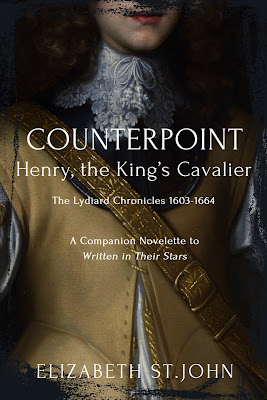
Read an excerpt from COUNTERPOINT Henry, the King's Cavalier (The Lydiard Chronicles: 1603-1664 by Elizabeth St.John


COUNTERPOINT

Henry, the King's Cavalier

(The Lydiard Chronicles: 1603-1664)

By Elizabeth St.John


A man may think his life is only measured by battles fought for the king. Until he meets a woman worth fighting for.


Henry Wilmot. Cavalier. Seasoned soldier. Grieving widower. On the eve of battle he is sent by the king to requisition arms. What he did not expect was that the supplies were a gift from a feisty and attractive widow who was hiding her own Royalist beliefs in plain sight. Even more alarming was that his quest took him into the heart of an enemy Parliamentarian household. Will Henry survive the fight of his life? And will Nan remember him if he does?

A counterpoint is a melody played in conjunction with another, or an opposing viewpoint in an argument. Our lives are complex, and each one of us carries within us a counterpoint to another’s story.


Here is a counterpoint to Nan Wilmot, from Written in Their Stars.


Excerpt


On the eve of the battle of Edge Hill, Henry Wilmot is in a desperate race to acquire arms on behalf of the king. He enlists the help of Allen Apsley, who leads him to his cousin.


The foolish groom just ignored me before bending and feebly pushing the guns back into a pile. He was a weed of a man, the guns near as long as him. At that rate, we would be there all night.


I nudged him with my boot. “Don’t be so bloody stupid, you whoreson. Get out of the damned way. Now.”


The fellow snatched up a gun and pointed it at me. “And you don’t be so bloody rude.” In a swift motion, Allen seized the weapon and flung it to the ground—and then burst out laughing. I was still struggling to understand why a stripling whose voice had not even broken was on a mission like this.


Allen hugged the lad, knocking off his hat. The recruit laughed with a laugh that sent heat to my gut. And shook loose a wash of auburn curls.


“Allen!”


“Nan!”


“Dear God!” I exclaimed.


She swept me a look that would have stopped the Earl of Essex dead and saved us the trouble of fighting again that month.


“Where’s my brother?” she demanded of Apsley.


“With the advance cavalry, on his way to London.” He paused. “Ned’s perfectly safe, Nan. We meet up from here and ride together.”


She nodded in my direction. “Who’s this?” 


“Henry Wilmot, at your service.” I swept my best bow. Somehow her attitude and the occasion demanded it.


“Should I know you, Mr. Wilmot?”


Again that arrogance. I just stared at her.


Apsley rushed to my rescue. “Colonel Wilmot is the king’s Commissioner General of the Horse. He leads the cavalry in his army, Nan. He is the most experienced military commander, second only to Prince Rupert.” He paused. “And more popular.”


She sniffed. “Let’s see if you can ride as well as you curse.” She turned to Apsley. “Give me a leg up, Allen. I’ll show you the shortcut across Ditchley Park. It’ll save you two hours on the track.”


This was too much. We did not need a woman slowing us down at this vital moment. “Can’t your men lead us? This is really no place for a lady.”


As Apsley cupped his hands and Lady Lee stepped up on her high horse—if it was even possible for her to climb any higher—her cloak swung open, revealing a pair of breeches and a man’s jacket, some kind of linen shirt and velvet waistcoat. None of which did anything to hide her figure nor her agility.


“Not what I had expected, Apsley,” I muttered under my breath. “Yet certainly more than I wished for.”


He grinned and quickly mounted, as did I. “Ride forward with Nan, Colonel, and I’ll bring up the rear to ensure the pack ponies don’t lag.” Cantering down the track, he left me at his cousin’s mercy.


“Shall we go?” She shot me another glance. “Or are you concerned about keeping up with a woman in unknown territory?”


She urged her horse forward, her hair streaming behind like the mane of a wild filly.


Elizabeth St.John

Elizabeth St.John was brought up in England, lives in California, and spends most of her time in the 17th Century. To inspire her writing, she has tracked down family papers and residences from Nottingham Castle, Lydiard Park, and Castle Fonmon to the Tower of London. Although the family sold a few castles and country homes along the way (it's hard to keep a good castle going these days), Elizabeth's family still occupy them - in the form of portraits, memoirs, and gardens that carry their imprint. And the occasional ghost. But that's a different story.

Connect with Elizabeth: Website • Facebook • Twitter • Amazon Author Page.