About

Sunday, September 26, 2021

Read an interview with Nick Macklin, author of Bloody Dominions (The Conquest Trilogy, Book 1) #HistoricalFiction #BlogTour #CoffeePotBookClub @NMacklinAuthor @maryanneyarde


Bloody Dominions

(The Conquest Trilogy, Book 1)

By Nick Macklin


Journey with those at the heart of the conflict as Caesar embarks on the tumultuous conquest of Gaul 58-51 BC. Book One 58-56 BC.


As Caesar’s campaign begins, tests of courage and belief will confront the three protagonists, shaping them as individuals and challenging their views of the world and each other:

Atticus – an impetuous but naturally gifted soldier, whose grandfather served with distinction in the legions;


Allerix – a Chieftain of the Aduatuci, who finds himself fighting both for and against Caesar; and

Epona – a fierce warrior and Allerixs’ adopted sister.

Experiencing the brutalities of conflict and the repercussions of both victory and defeat, Atticus, Allerix and Epona will cross paths repeatedly, their destinies bound together across time, the vast and hostile territories of Gaul and the barriers of fate that have defined them as enemies. In a twist of fate, Atticus and Allerix discover that they share a bond, a secret that nobody could ever foresee…


Publication Date: 28th June 2021

Publisher: Troubador Publishing

Page Length: 368 Pages

Genre: Historical Fiction


Grab a copy HERE!


This novel is free to read with #KindleUnlimited subscription.


INTERVIEW


Writing Interview questions.


Why did you choose to write your book in this era?


I always wanted to set the novel against the backdrop of a significant period in Roman history. Ideally, something offering the potential for meaningful character and plot development that hadn’t already received exhaustive coverage. I eventually settled on Caesars tumultuous occupation of Gaul. Spanning 8 years, the prolonged clash of cultures offered ample opportunity for the kind of dual perspective from which I was hoping to tell the story, whilst the violent conflict provided a wealth of material to explore the changing fortunes of war and its impact at a personal level. The switching of allegiances, nations fighting for and against Rome also provided the potential for some intriguing plot lines. As my research unfolded, I was struck by just how heavily the Roman psyche was influenced during this period by the scare they had received 50 years earlier when invading Germanic tribes defeated their legions. Seeing references to the veterans of that war watching their sons and grandsons enlist for a similar campaign, I began to think about the potential for developing that link, on both sides of the conflict. And so, the idea for the Conquest Trilogy was born.


What is the most surprising thing you discovered while you were researching this era?


The issue that had the biggest impact on me whilst completing my research was the sheer scale of the suffering created by Caesar’s incursion. I’m not entirely sure it was a surprise, but my reading until then had typically focused on stories surrounding individual battles and/or aspects of the campaign, I just hadn’t thought about the magnitude of the conquest in its entirety. I know that the tribes of Gaul weren’t living a life of peace and tranquility before Caesar’s arrival, raids and battles between nations would have been customary and the impact of war was something most individuals would have experienced to a greater or lesser extent. However, the scale of the Roman invasion and the effectiveness of their legions changed the dynamic significantly. Even allowing for the politically motivated inflation of enemy casualty numbers, and Caesar was as much a politician as he was a general, the conquest was exceptionally brutal, with untold numbers killed, maimed or enslaved, including huge numbers of civilians. It is one of the reasons that I wanted to dedicate the book to the memory of those whose lives feature in its pages.


Can you share something about the book that isn’t covered in the blurb?


A running theme throughout the Trilogy will be the ‘difficult’ relationship Atticus has with his legions Legate, Lucius Minicius Aquila. The animosity between the two begins when Aquila’s hesitancy to act forces the hand of his junior officers who send Atticus on a lone foray to turn the tide of battle. His success draws attention to the inactivity of a chastened Aquila, whose attempts to punish Atticus are thwarted by Caesar in a very public display of recognition. Determined to make life difficult for the young legionary, things become more complicated for Aquila when Atticus saves his life in battle. Unfortunately for Atticus, Aquila has no desire to honour his debt nor have it outstanding for any length of time. He would far rather the obligation simply cease to exist, que lots of attempts to place Atticus in jeopardy. As a character I drew inspiration for Aquila from an actual legion commander, Lucius Minicius Basilus, who lived through events in Gaul and the subsequent civil war where he supported Caesar.  Basilus later joined the conspiracy to kill Caesar, angered at what he considered to be insufficient reward for his earlier support. He was eventually killed by his own slaves in 43 BC, who were driven to this desperate action by his cruel and violent treatment. His literary incarnation Aquila, shares these same tendencies but not necessarily the same fate!!


If you had to describe your protagonist, in three words, what would those three words be? 


I am going to have to cheat here as I have three protagonists, so if you will excuse the indulgence I will offer 9 words, three for each:


Atticus: - Headstrong, brave, conflicted

Allerix: - Honourable, thoughtful, courageous

Epona: - Strong-minded, intuitive, fearless


What are you currently working on?


I am currently working on Book 2 of the Conquest Trilogy, ‘Battle Scars’, which covers the period 56-53 BC. Against the backdrop of Caesars continuing invasion of Gaul, Atticus finds himself facing the challenges of leadership and a dangerous mission on the borders of the Empire, whilst Epona and Allerix fight for survival with Ambiorix as he leads the resistance to Rome’s incursion. Along the way Epona meets up with Aquila, Allerix and Atticus cross swords, again, and we are introduced to some new characters, including Titus Pollo, Lucius Vorenus and Vercingetorix. 


Personal Interview questions.


What do you like to do when you are not writing?


I enjoy running, well, after I’ve been out, not necessarily whilst in the middle of a run, walking and have always been a keen traveler, although for obvious reasons more recently that passion has been confined to planning future trips. I also enjoy reading, watching sport and baking.


What did you want to be when you grew up?


I always wanted to join the Royal Air Force and in particular the Military Police. I’m sure the motivation had a lot to do with the idea of having a dog to accompany me on patrol but unfortunately my eyesight wasn’t good enough and it wasn’t to be. I still haven’t got the dog yet either but that is a plan I will realise at some point. 


What’s your favourite food?


Am I allowed to say Crisps, as part of a balanced diet obviously!! My favourite meal would probably be some form of roast, although I am also partial to most things Italian. 


Either or!


Tea or coffee: Tea

Hot or cold: Hot

Movie or book: Both

Morning person or Night owl: Night Owl

City or country: City

Social Media or book: Book

Paperback or ebook: Paperback


A history graduate, Nick enjoyed developing the skills that would stand him in good stead during the extensive research he conducted prior to writing his novel. Whilst the ancient world unfortunately didn’t feature to any extent in his history degree, (the result of failing miserably to secure the A level grades that would have permitted greater choice) he maintained a lifelong and profound interest in ancient history and especially the Roman Empire, continuing to read avidly as he embarked on a career in HR. Over the next 30 years or so Nick occupied a variety of Senior/Director roles, most recently in the NHS. Unsurprisingly, writing in these roles was largely confined to the prosaic demands of Board papers but Nick never lost the long-harboured belief, motivated by the works of writers such as Robert Fabbri, Robyn Young, Anthony Riches, Simon Scarrow, Matthew Harffy and Giles Kristian, that he too had a story to tell. When he was presented with a window of opportunity c3 years ago he took the decision to place his career on hold and see if he could convert that belief into reality. 

Nick always knew that he wanted to set the novel against the backdrop of a significant event/period in Roman history. Looking to narrow that down to something offering the potential for meaningful character and plot development, but that hadn’t already received exhaustive coverage, he settled on Caesars tumultuous occupation of Gaul. Spanning 8 years, the prolonged clash of cultures offered ample opportunity for the kind of dual perspective from which he was hoping to tell the story, whilst the violent conflict provided a wealth of exciting material to explore the changing fortunes of war and its impact at a personal level. The switching of allegiances, nations fighting for and against Rome also provided the potential for some intriguing plot lines. As his research unfolded, he was also struck by just how heavily the Roman psyche during this period was influenced by the scare they had received 50 years earlier when Germanic tribes invaded their territories and defeated their legions. Seeing references to the veterans of that war watching their sons and grandsons enlist for a similar campaign, he started to think about developing that link on both sides of the conflict. And so, the idea for the Conquest Trilogy was born.

In Bloody Dominions Nick has sought to produce a novel in which unfolding events are experienced and described from the perspective of protagonists on both sides of Caesar’s incursion into Gaul.  Conscious that the role of women in Roman fiction, Boudica aside, is largely confined to spouse, prostitute or slave, Nick wanted to ensure that one of his lead characters was female and a prominent member of the warrior clan of her tribe. The novel is driven by these characters but the framework against which their stories unfold is historically accurate, featuring actual participants in Caesar’s campaign and drawing on real events as they occurred. As such Nick is genuinely excited about his characters and the story they have to tell.

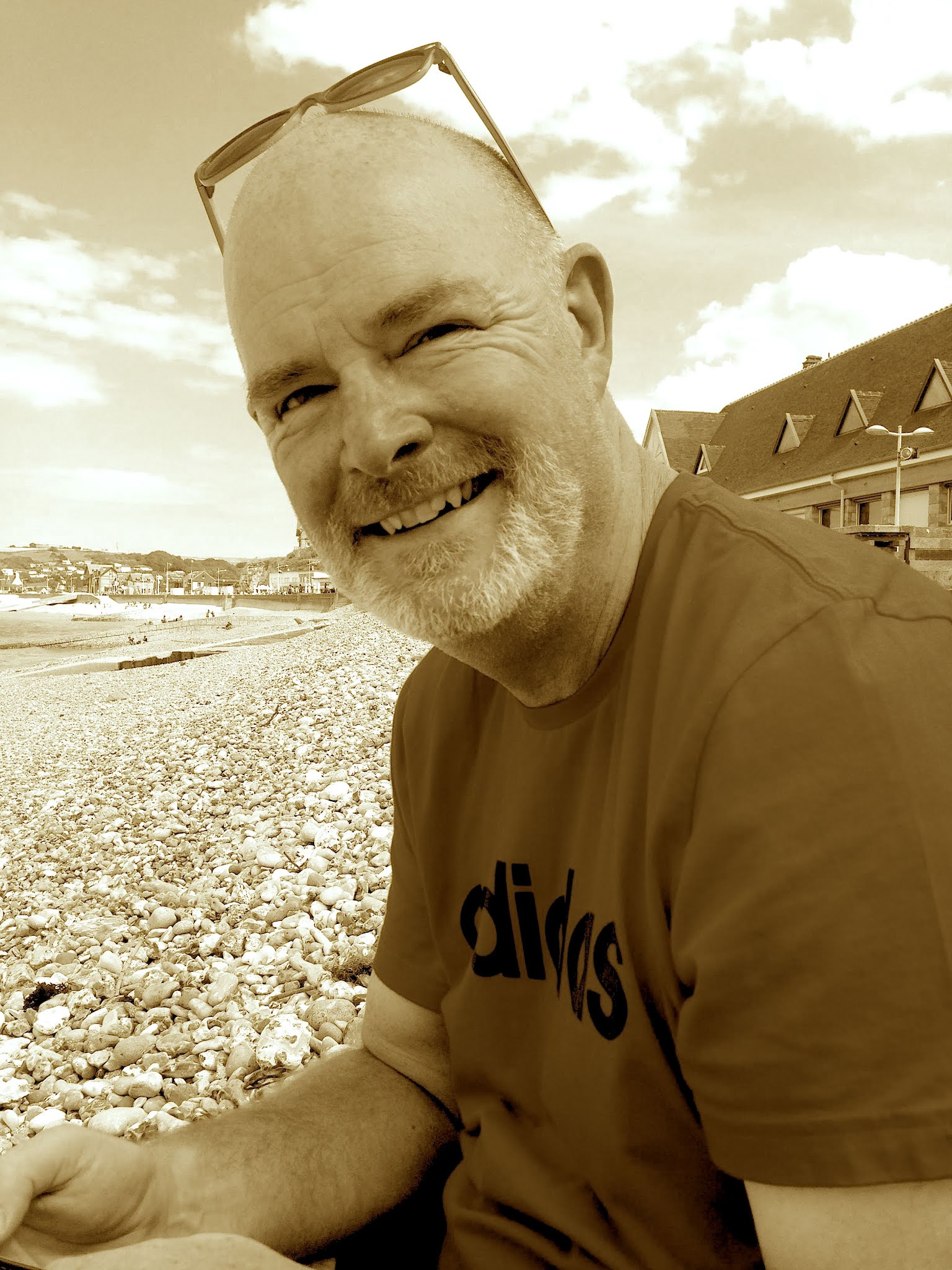
Nick lives in Exeter with his two daughters and is currently juggling work as an Independent HR Consultant with writing the second novel in the Conquest Trilogy, Battle Scars.

Twitter • LinkedIn


Thursday, September 23, 2021

Read an interview with Pamela Stephen, and check out an excerpt from her book ARTISTS AND SPIES: A NOVEL! #HistoricalFiction @PamStephen13

Today, I am delighted to interview Pamela Stephen! While you're here, have a look at her book! If you scroll down, you can read an excerpt!


ARTISTS AND SPIES: A NOVEL
By Pamela Stephen

The story of Charlotte Le Juge du Coudray, stepdaughter of an 18th century French artist.  Inspired by the life and work of Hyacinthe Rigaud, portrait painter to Louis XIV, the tale imagines the world of his stepdaughter Charlotte, a woman who despite her stepfather’s fame, led a life of quiet mystery. A story of danger and romance in equal measure.

Grab a copy HERE!


INTERVIEW

Why did you choose to write your book in this era? 

I discovered the work of the painter Hyacinthe Rigaud on a trip to the Pyrenees.  In Perpignan, there is a museum named after him that displays his work prominently.  And then I read a good deal about him afterwards.  His most famous painting is the portrait of Louis X1V that hangs in the Louvre.  I’m also fascinated by the Georgian period, so it was logical that I should set ‘Artists and Spies’ in that time.  I came across an intriguing proposition about the artist’s family and I took a leap of imagination from there.  So my heroine is his daughter, a woman who leaves the convent where she has been educated and brought up, and travels to England to find a new kind of life.

There were so many social and technological changes going on during the period, but I wondered whether people’s interests and concerns have changed that much.  I’m not sure they have.  There was political intrigue and upheaval, and London was a place where there was so much going on.  It also helped that I had some knowledge of the area where my novel is set, and I was able to gain access to pictures and maps from the time, as well as documents relating to Rigaud’s family and legacy.

Did you find researching this era particularly difficult? What was the hardest thing to find out, and did you come across anything particularly surprising?  

Researching the period wasn’t harder, I think, than looking at any other era; easier than some in fact.  My current work in progress is set during the 5th Century BC in Ancient Greece.  And that I would say IS hard.  It needs a much greater leap of imagination not only to visualise the place and the customs and lifestyles of the time, but also to try to understand the mindset of a person of the period.

Can you share something about the book that isn’t covered in the blurb?

My central protagonist in ‘Artists and Spies’ goes through a huge range of experiences in her quest to become an artist in Georgian London.  The fact that she is a foreigner means that at least one character finds her a threat.  

If you had to describe your protagonist(s), in three words, what would those three words be and why?

She’s resourceful, talented and driven; a woman artists in a man’s world.  Oh and she has a secret weapon, but she doesn’t even know it!

What was the most challenging part about writing your book?

Preparation for publishing.  I wanted to get on with other things, but it needed to be done; for me, it’s not the most interesting job and needed painstaking work to ensure it had no errors of any kind, whether typos or formatting.  Get someone else to do this for you if you can!

What are you currently working on?

I’m currently editing the novella I mentioned earlier.  It concerns another strong woman, a Delphic oracle.  It’s a narrative told in two time frames,  the here and now, and the 5th century BC.  I’ve always had a love for the architecture of the period, and it seemed an appealing prospect.  It took a long time to absorb enough information to give the setting credibility, but then it seemed to take on a life of its own.

What would you tell an aspiring author who had some doubts about their writing abilities?  

I’d say, what have you got to lose?  The more you write, the better you get.  If you don’t think it’s good enough, keep at it until it is.  If it is good enough, show it to someone else, enter competitions, publish it yourself, use an alias if you like.  Just get it out there.  I know, easier said than done, but trust me you don’t want to be nursing regrets that you had a novel in you, but didn’t do anything about it.  
 

EXCERPT

November 1743

‘Painting contains a divine force which not only makes absent men present, as friendship is said to do, but moreover makes the dead seem almost alive. Even after many centuries they are recognised with great pleasure and with great admiration for the painter.’

Leon Bautista Alberti, De pictura, 1435, Book II. 

Brushing down her habit, and descending from the coach that day, Charlotte Le Juge du Coudray felt a sense of anxiety. She wondered what she would find at her stepfather's home. Reading between the lines of his servants’ letters, she could detect the Duponts’ concern for him. The old couple had remained in the establishment alone with him, and tending to his needs, had outlasted the cook, the footmen and all the staff of his once bustling studio. The studio had shut first, her stepfather deciding to work alone whenever he needed a respite from the care of his sick wife. She had been ill for several years and throughout that time there had been a gradual diminution of their public and private lives until the world revolved around her sickbed and his careful attention of her, his beloved. The household had reduced as the need to entertain clients and colleagues disappeared. Still throughout those days, the loyal pair of servants struggled on, writing to her of his growing infirmity, of her mother's illness and the burden of their work. The huge Paris house was largely empty, full of memory and echoes. The studio itself had not been used by her stepfather since her mother’s death eight months before. The dim hallway, which had once been a noisy busy hub, was quiet.

Charlotte had been shocked to receive the message that he was unwell. Her life at the convent had separated her from the everyday world, and now it intruded in a way which had brought her to the present suddenly. Her stepfather was very elderly and Charlotte had naïvely thought that he would go on and on. It had not occurred to her that his death was an inevitable consequence of the loss of his wife. So she had allowed time to drift. And he had been too proud to ask for her until now.

He asked the servants to write, probably suspecting that they were in regular contact already. She could no longer remain at the convent in good conscience. He was apparently beside himself with grief, and Madame Dupont was quite frightened by his outbursts. Even though she had been unwell for a considerable time, Madame Rigaud's demise had been shocking for everyone around her; its effect on her stepfather had been profound and eight months on, Charlotte was really not prepared for the fragile old man she saw on her arrival. 

She was shown into his study, the familiar room with its reminders of his past glory - his framed Order of St Michael, the Medici bronzes, the pair of Meissen parrots, the neat stack of reference books. He was sitting at his desk, with papers in a pile before him. The muddle of materials on its surface was quite uncharacteristic. She noticed how thin his hair had become, a lattice beneath which a shiny freckled surface was visible. He was concentrating on inking his quill, trying to steady it as it left the bronze well. His hands shook, but he set his jaw and grasped the writing instrument again, only to set it down when she made a slight noise to attract his attention.

‘Here you are,’ he remarked, as if they had last seen each other only minutes earlier. 

‘I came at your message,’ she replied, leaning over to kiss him.
She sat in the chair opposite his desk. 

‘Is Geoffroy with you?’ He peered at her carefully, and she realized that his precious sight might be failing him.

‘No, but he will be here shortly. How are you?’

‘Well enough,’ he said. ‘The days get no easier. Your mother is a comfort.’

She wondered then if his mind was not what it used to be, but he was gesturing to the Daulle engraving on the wall. 

‘There she is, keeping one eye on me,’ he chuckled, and leaned forward ‘Of course the real woman is in the next room.’

A sense of horror came over her. He was obviously joking, but spoke as if they both knew she was nearby. Monsieur Dupont's letter had described him as wandering the rooms, apparently looking for something he had mislaid, frequently lifting covers, opening drawers. But this was more alarming. Was he aware that Mother had gone?

‘Come, let's look together.’ He stood up very slowly, moving from the seat to a crouch in one movement, then slowly upright, shuffling round the desk. She put out her arm for him to lean on and he took it; it was the first time she had ever supported him, and he seemed smaller and thinner than she remembered. 

In the dining room, she realized she had misunderstood. There were many rectangular shadows on the Chinese wallpaper, where her stepfather's pictures had hung, but centrally over the mantel, in place of the gilded scrolled mirror which had once blazed with the reflected light from ornate girandoles, was a self-portrait that she had only seen before as an engraving. In the composition, her mother's picture stood on an easel and he had depicted himself in the very moment of completing his wife's likeness. Tears came to her and she looked at the carpet, hoping to keep her reaction from distressing him.


‘Yes,’ he said. ‘I talk to her frequently. She scolds me for this and that. But I'll be with her soon, and we can have a good argument, just as in the past.’


Pamela Stephen is the author of ‘Artists and Spies’, a novel about Charlotte Le Juge, stepdaughter of the celebrated 18th century artist Hyacinthe Rigaud. Pam was born in Berkshire, in the United Kingdom, but has spent most of her life in the East of England.  She now lives in Lincolnshire with her husband, and is currently working on a new historical novella. You can find her on Twitter @PamStephen13.  Her visual scrapbooks for writing can be found on Pinterest - @pstephen860.


Wednesday, September 22, 2021

Read a guest post by Philip Yorke, author of Redemption (The Hacker Chronicles, Book 2) #HistoricalFiction #EnglishCivilWar #BlogTour #CoffeePotBookClub @yorkeauthor @maryanneyarde


Redemption
(The Hacker Chronicles, Book 2)
By Philip Yorke

Saturday, the second day of July, in the year of our Lord, 1644, will be a day long remembered by the men and women committed to ending the reign of a tyrannical King. For on this day, the forces of Charles the First were crushed on the bloody fields of Marston Moor.

The calamitous defeat forces the increasingly desperate Royalists to intensify their attempts to bring about the immediate demise of their Parliamentarian enemies. This includes devising an audacious plan to assassinate the man they believe is key to the war’s outcome.

With the plotters ready to strike, Francis Hacker, one of Parliament’s most loyal soldiers, becomes aware of the conspiracy. With little time to act, he does everything in his power to frustrate their plans. But, alas, things start to unravel when brave Hacker finds himself pitted against a ruthless and cunning mercenary, a man who will resort to anything to achieve a ‘kill’. 

Publication Date: 2nd July 2021
Publisher: Mashiach Publishing
Page Length: 480 Pages
Genre: Historical Fiction

Grab a copy HERE!

This novel is free to read with #KindleUnlimited subscription.


GUEST POST

I have often heard it said that everyone has at least one book in them. And this may be true – but I know very few people who have tested out the theory.

A lack of confidence, a lack of time, or simply a lack of willpower, often results in so many of us not taking up the writing challenge. 

But if you do have that inner burning desire, one that keeps prodding and poking you at the most inconvenient of times, then there is some good news to share: writing a novel is far easier than it might seem!

Believe me, I know; I have recently published my second novel – and have started work on my third!

The truth is, I had got it all wrong. I thought you needed to have the perfect plot, chapter structure and process all lined up and ready to go. How little I knew. The reality is I needed none of these things. A germ of an idea is all that was required, a bit of a plan (understanding where you are going to go with the opening three or four chapters), and a handful of believable characters.

Of course, because I write historical fiction, there was also the small matter of identifying the period I wanted to write about. But that was an easy choice: I love the seventeenth century, particularly the 20-year spell between 1640 and 1660 – when Britain was gripped by a brutal civil war and the monarchy come to an abrupt and dramatic end for eleven years.

In real terms, my choice was a very easy one.

Difficulties did arise when trying to identify some of the characters I would write about. But, once I got going, that was also a relative walk in the park.

I had devised a main character profile one day when there was no sport on television, my wife and the children were out shopping, and the cat had also abandoned me! Unsurprisingly, perhaps, given the setting of my book, I opted for a stoic male whose allegiance was to Parliament. He was a man of faith (as were most people at the time), a mid-ranked army officer, and an individual who was in conflict with his two brothers – members of his own bloodline who had chosen to support the cause of King Charles the First.

When I had finished making my notes, I looked at what I had written. At first it seemed implausible and unrealistic, a million miles away from what I perceived the period to be like. How wrong I would turn out to be.

Several weeks after I had drawn up the details of my main character, I visited the National Civil War Museum. It is not sited in London, but in Newark in the East Midlands. I live in Leicestershire, just a 40-minute car journey from the historic town. 

I remember walking into the museum and sitting down to watch a video about the civil war. It told the story of a family who lived in the Midlands. They had been torn apart by the conflict. Two of the sons had sided with the King; a third had become an officer in the Parliamentary army. They were a devoutly religious family, yet they couldn’t agree on some of the most fundamental things. So, the brothers went their separate ways and by 1643 were firing leaden musket shot and cannon balls at each other across the River Trent. Literally.

As you can imagine, I the video left me speechless: somehow, completely by chance, I had found my dynamic main character!

His name is Francis Hacker. 

In 1643 (when the Hacker Chronicles begin), Francis was in his mid-20s; he was married to an incredible woman (Isabel) six years his elder; he and his two brothers lived within ten miles of each other, and in May of that year, one of these brothers was killed in a skirmish close to Francis’s home, most probably shot by a member of the Militia my main character commanded.

From this moment, everything seemed to happen in a bit of a blur.

I started to use the Internet to research my man. What I discovered confirmed I had made the right choice, for Francis was a man who was right at the heart of the English Civil Wars. He became close friend and confidante of Oliver Cromwell; he was twice offered the opportunity to swap sides and take command of his own regiment in the King’s army, only to scornfully decline the chance to swap sides; and he was also one of the 59 men to sign the death warrant of Charles the First in 1649.

The more I dug into the man and his exploits, the more I discovered.

But my biggest ‘find’ – the one that convinced me I had a potentially great story to tell – was the discovery that Francis’s story had largely been forgotten. Although he was a great military leader, he was a poor orator, something of an introvert. That meant the other regicides made far more noise than he did. And because their voices were louder, historians have had a far easier job piecing their lives together and telling their respective stories.

With Francis Hacker in the bag and supporting characters like Rowland and Isabel also identified, I began the exercise of finding the rest of the supporting cast.

In the early 1640s, Cromwell was a relatively unknown figure. He was a Colonel in Parliament’s Eastern Association Army. Some basic checks on my part revealed the early years of the Cromwell story is not well known. And as Francis and Oliver became good friends (a fact), this was an area I needed to focus on. And I did.

But what I really needed to find was a great anti-hero.

Some might say I have already done this in Francis, as stories about this period tend to paint the Parliamentary side as the bad guys, and the cavaliers as the defeated goodies! But, as Redemption demonstrates, I have a different perspective!

What I needed was a prominent Royalist, who could convincingly be portrayed as an individual with purely selfish intent, perhaps even an evildoer.

In this regard, I created Gustav Holck – a amalgam of a character drawn from a couple of real men who fought on the fields of Europe in what became known as the Thirty Years War. 

If Holck were alive today, he would be diagnosed as a murderous psychopath. In the seventeenth-century, at a time of the greatest bloodshed Britain has ever known (greater than both World Wars), Holck was a useful man to have on your side, his thirst for killing a desirable attribute!

Although the character of Holck is a figment of my fertile imagination, his development came about by researching some of the mercenaries who fought in the wars for both sides. They were not in England for noble reasons. They were here for personal gain and social advancement. And many of them were willing to do whatever it took to get noticed!

It’s fair to say that by the time I had finished all my research and character development, I was hooked. And at times, I am sure it must have appeared to my wife and family that I was starting to think I was Francis Hacker (I hear this is quite common among writers)!

Thankfully, my wife is a very tolerant woman. And she needs to be – for I have three more novels to write about Francis Hacker, which are likely to take me until 2025 to complete. 


Philip Yorke is an award-winning former Fleet Street journalist who has a special interest in history. His Hacker Chronicles series, to be told in five fast-paced historical fiction novels, tells the story of Parliamentarian soldier, Francis Hacker.

Redemption, the second book in the series, is set during the period 1644-46 (during the first English Civil War), when events take a significant turn in favour of Parliament.

Philip is married, and he and his wife have five children. He enjoys relaxing to classical music, reading the works of Nigel Tranter, Bernard Cornwell, Robyn Young and CJ Sansom, and supporting Hull City FC and Leicester Tigers RFC. 

He lives in Leicestershire, England.


Website • Twitter • Facebook • Instagram • BookBub • Amazon Author Page • Goodreads


Follow the tour HERE!


Monday, September 20, 2021

Read an interview with Karen Heenan, and check out her book A Wider World (The Tudor Court, Book II) #HistoricalFiction #Interview @karen_heenan


Today, I welcome Karen Heenan to my blog for an interview! While you're here, check out her book!

A Wider World (The Tudor Court, Book II)
By Karen Heenan


Memories are all he has…now they could save his life.

Returning to England after almost five years in exile, Robin Lewis is arrested and charged with heresy by the dying Queen Mary. As he is escorted to the Tower of London, Robin spins a tale for his captor, revisiting his life under three Tudor monarchs and wondering how he will be judged—not just by the queen, but by the God he stopped serving long ago.

When every moment counts, will his stories last long enough for him to be saved by Mary's heir, the young Queen Elizabeth?

Grab a copy HERE!

INTERVIEW

Writing Interview questions.

Why did you choose to write your book in this era?

A Wider World is the second book in my Tudor Court series, so I didn’t have much choice. Robin Lewis, the main character, was a secondary character in Songbird, my first book. When I finished that, I thought I was done with the 16th century, but he spoke up – with the same line that now begins the book – and I had to listen.

Why I started in this era goes much further back – my mom let me stay up and watch The Six Wives of Henry VIII with her when I was just 6 or 7, and the time period and the history and personalities got their hooks into me young, and I never got over it. I’ve been a historical fiction reader ever since. 

Did you find researching this era particularly difficult? What was the hardest thing to find out, and did you come across anything particularly surprising?

After 40-plus years of interest, it surprises me that there are always new books to acquire and new facts to be absorbed, but there always are. The hardest things are the bits that give good historical fiction its depth – the minute details of daily life, the clothing, the food, how to get from place to place. Historical events are well-documented, but people didn’t always write down the interesting everyday details.

The hardest thing to deal with was all the travel that takes place during the book. Trying to figure out how long it would take to go from Yorkshire to London, on horseback, in a rainy November, was difficult. And then knowing that it was a journey on a deadline, with stopping places, changes of horse, etc. –that gave me a headache. The same goes for crossing the channel (size of boat, season, weather). Everything travel-related was weather-dependent.

Can you share something about the book that isn’t covered in the blurb?

Robin’s journey to the Tower takes place over a week in November, 1558. His captor is the son of an old acquaintance from his days at the court of Henry VIII, and Robin regales him with stories of fifty years of service to the crown in an attempt to slow their journey and remind his captor of his humanity.

If you had to describe your protagonist(s), in three words, what would those three words be and why?

Prickly, intelligent, ambitious. 

Robin’s intelligence and ambition define him. Coming from nothing, he knows that the only way he can rise in a world of influence and connections is by sheer hard work and knowing the right people. His prickliness is his weak point. He’s just not good with people, and he doesn’t have the skills to be superficially social. Thankfully, he acquires a few close companions who can cover for his lapses and look out for him. 

What was the most challenging part about writing your book?

The dual timeline tripped me up more than a few times. While there are still headers on the “present” portion of the book – Robin’s journey to the Tower is very time-specific – originally every chapter had its own heading so I could keep track of the chronology. I cut those headings in the final draft because the “past” chapters are the stories that Robin tells to his captor and I wanted them to flow like stories, without the specificity of time/location.

The other challenging aspect was Robin himself. He’s not the most sympathetic character, and quite a few readers have told me that they had difficulty warming to him. I find that hard to believe, but then I created him, so of course I find him fascinating, even when I too want to beat him about the head for being his own worst enemy.

Robin’s sexuality was another aspect, which I’ll cover in the next question.

Was there anything that you edited out of this book that would have drastically affected the story, should it be left in?

It wasn’t so much edited out as re-thought. Robin is bisexual, which I didn’t known until I began writing and he informed me. But he’s aromantic, too – he doesn’t want to have much to do with people in general, not on a close, personal level. When someone does reach him, their gender is not a factor in his attraction.

I wanted to explore this a bit more – attitudes toward homosexuality in Tudor England were pretty draconian, if you got caught – but I couldn’t make Robin be someone he wasn’t. His sexuality wasn’t a major part of his personality, so I couldn’t give him relationships or adventures just because I wanted to see what happened next, and I couldn’t find a way to include the hilariously named Buggery Act of 1533 into the book at all. 

What are you currently working on?

I’m currently working on a story set during the Great Depression of the 1930s, which is the book I started after Songbird, and which got derailed by A Wider World and its sequel, Lady, in Waiting. It’s the story of two very different sisters, and a child who means everything to both of them.

I’m discovering that it’s actually easier for me to maneuver in the distant past than in a time so close to my own. The location of the book is not all that far from where I live, but because of Covid, the historical society and research library which I would otherwise be able to visit is still closed. I have a very long list of questions and things to look up if/when it opens again.

What would you tell an aspiring author who had some doubts about their writing abilities?

We all doubt, and we do it anyway. I reach the same point in every book and doubt that it’s every going to be finished, much less readable, and then I remember that it always happens. 

The best advice I have is to be as kind to your own efforts as you would be to a good friend who shows you their writing. Understand that your first draft is very unlikely to look anything like the bright, shiny idea that started you off – and that’s okay. Your best work will almost always be done in revision, once you’ve gone through writing that first draft and really understand what the book is about, and what it needs to make it better. 


As an only child, Karen Heenan learned early that boredom was the enemy. Shortly after she discovered perpetual motion, and has rarely been seen holding still since.

She lives in Lansdowne, PA, just outside Philadelphia, where she grows much of her own food and makes her own clothes. She is accompanied on her quest for self-sufficiency by a very patient husband and an ever-changing number of cats.

One constant: she is always writing her next book.


Thursday, September 16, 2021

Read my review of Ultraxenopia (Project W.A.R., #1) by M.A. Phipps #Dystopian #YoungAdult #YA @authormaphipps @XpressoTours


Ultraxenopia
(Project W.A.R., #1)
By M.A. Phipps

Betrayed by Family. Tortured by the Enemy. Destined to Destroy the World.

Wynter Reeves lives by three rules: Don’t stand out. Blend in. Remain invisible. In a world where individuality is dangerous, being forgettable keeps her alive.

Until she begins showing signs of a rare disease, drawing the unwanted attention of the State’s sinister research facility, the DSD. Apprehended against her will for testing, Wynter becomes the subject of the mysterious Dr. Richter, who is determined to make sense of her condition.

However, Dr. Richter’s intentions are less than noble, and after months of horrifying experimentation, Wynter jumps at the chance to escape her captors. But freedom isn’t what she expected, and as her symptoms worsen, she must make a choice. One that will determine not only her future…

But the fate of the world.


Publication date: December 1st 2020
Genres: Dystopian, Young Adult 

Goodreads • Amazon • Barnes & Noble • iBooks • Kobo • Google Play


MY THOUGHTS

In a society where to stand out means that you are a troublemaker or a potential threat to society, Wynter Reeves stands by her own policies – to draw no attention to herself, to do nothing that could be considered rebellious, and to survive. To cause trouble could land you in Re-education for a year, and if you weren’t lucky enough for that, you were sent to Termination. Wynter’s plan involves avoiding all of that and leading a life boring enough to let her be considered a satisfactory citizen. 

However, in one of the most important moments of her life, while she is taking her placement exam that will determine which zone she is to work in, and how the rest of her life will pan out, Wynter is struck with intense pain and a glimpse of destruction. As it passes, she realises what her actions, of drawing all eyes to her and submitting her exam unfinished in order to leave, means for her. She runs, but her worst fears soon come to life, and she finds herself locked within the Department of Scientific Discoveries – the DSD. And everyone knows that those who enter the DSD never leave.

Wynter finds herself at the mercy of Dr. Richter, who gives her a choice – willingly submit, and allow them to run tests on her for the rare illness they believe she has, or don’t, and they will run them without her consent. As Dr. Richter’s tests grow brutal, and Wynter finds herself wishing for death to overcome her, just so she can escape the pain, Dr. Richter’s methods finally bring around the result he wanted. Wynter relives the vision she saw in her exam and sees a man next to her as the world crumbles. A man called Ezra Laramie. A man who is a suspected member of the terrorist organisation PHOENIX.

I greatly admired Wynter. She goes through unimaginable torture, and she has no escape. She is not a two-dimensional character in any way. She does not soldier through in the hopes that things will end up alright. Instead, she withers away under Dr. Richter’s terrible control, and she is forcefully kept alive. The vision of Ezra, though, gives her just a little bit of hope. If the vision is of the future, even though it means the world will end, it also means that she will find some refuge, away from Dr. Richter.

I do not want to give away too much of the story, and talking about Wynter may lead to just that. Instead, let us take a look at some of the other characters in this book that I adored. In particular, Ezra and Jenner. It seems inevitable that we will meet Ezra in the story, so I do not think I am giving anything away by speaking of him. I loved Ezra, he may be rather young, but he takes on an incredible amount of responsibility, and he has a past that has both steeled him and given him a softer edge – it just depends on what information he has, and whether someone is a threat or not. Jenner, is, on the surface, much more friendly and approachable than Ezra. He, too, has a past that he would rather forget about, and although he has clearly been affected by it, he tries to stop others from feeling their own pain. He tries to make people laugh, to make them smile. To maybe make them forget about their worries for a moment or two. I loved Jenner as well, and I found myself in a constant state of trying to figure out if I preferred Ezra or Jenner. I think I ended up with Jenner. 

I am aware that this comparison has been made before, but this book reminded me of the Divergent series by Veronica Roth. Everyone has their place in the world, and once you are put there, you stay there. Everyone must do as they are told, and when someone is found to be different, all hell breaks loose. In a way, it also reminded me of The Host by Stephenie Meyer, especially when talking about PHOENIX. The world that has been created within the covers of this book was simply awe-inspiring to read about, and everything has been thought of, down to the smallest of details. After reading this book, I had a look at the interactive map of the State, and it is exactly as I imagined it. There are seven zones, with Zone 1 being the rich, and those in charge, and Zone 7 the derelict zone, the lawbreakers, and the poor. The way that the map is so exactly how I imagined the State while reading just goes to show the impressive story-telling skills this author has.

This book has everything and more that you could possibly want from a dystopian, young adult novel. There is no way I can possibly leave this series alone after Book 1, and the cliffhanger, in particular, makes me desperate to read book 2!


M. A. PHIPPS is an American author who resides near the ocean in picturesque Cornwall with her husband, daughter, and their Jack Russell, Milo. A lover of the written word, it has always been her dream to become a published author, and it is her hope to expand into multiple genres of fiction.


GIVEAWAY!
a Rafflecopter giveaway

Hosted by:

XBTBanner1


Monday, September 13, 2021

Read an interview with Malve von Hassell, author of THE AMBER CRANE #HistoricalFiction #Timeslip #ThirtyYearsWar #WWII #BlogTour #CoffeePotBookClub @MvonHassell @maryanneyarde


THE AMBER CRANE
By Malve von Hassell

Chafing at the rules of the amber guild, Peter, an apprentice during the waning years of the Thirty Years’ War, finds and keeps a forbidden piece of amber, despite the risk of severe penalties should his secret be discovered.

Little does he know that this amber has hidden powers, transporting him into a future far beyond anything he could imagine. In dreamlike encounters, Peter witnesses the ravages of the final months of World War II in and around his home. He becomes embroiled in the troubles faced by Lioba, a girl he meets who seeks to escape from the oncoming Russian army.

Peter struggles with the consequences of his actions, endangering his family, his amber master’s reputation, and his own future. How much is Peter prepared to sacrifice to right his wrongs?


Publication Date: 25th June 2021
Publisher: Odyssey Books
Page Length: 268 Pages
Genre: Time-slip Historical Fiction / Young Adult
Trigger Warnings: References to rape, Holocaust, World War II, violence

Grab a copy HERE!


INTERVIEW

Writing interview questions

Why did you choose to write your book in this era?

I have always been interested in the years of the Thirty Years War in Germany, a period that is not often the subject of fiction. Meanwhile, my decision to write a time-slip book, that is, a story set in 1644-45 and 1944-45, was driven by my personal connection as a result of my mother’s and other maternal relatives’ stories about the region (near Gdansk, Poland) and their experiences during World War II. 

What is the most surprising thing you discovered while you were researching this era? 

In the book, my protagonist makes reference to the legend of an amber amulet called the Bear of Happiness. According to the legend, a long, long time ago, in a land along the Baltic Sea, a hunter caught a wild bear. After his successful hunt, he carved a tiny bear amulet out of a piece of amber. As long as the hunter carried his little bear with him, he never lost heart or feared anything when encountering trials on his journey. Eventually, the hunter lost his amulet, and his long and fruitful life came to an end. The amber bear vanished forever, but people still believe in its power to this day, calling it the Bear of Happiness.

In 1887, an amber amulet was found in a peat bog near Slupsk, Poland. Almost 4 inches long, 1 inch wide, almost two inches high, it is dark reddish gold and translucent. Its rounded body, shortened stubs for legs, ears, a snout with two holes for the nose, and round eyes, gives it the appearance of a bear cub. As bears go, this is an odd one. It can’t even stand on its own. You can only see it properly if you hold it in the palm of your hand.

Citizens of Slupsk decided that this was the bear of the legend, their very own Bear of Happiness. Eventually, however, this precious amulet ended up in a museum in Szczecin, Poland. 

Meanwhile, to my delight I discovered that the town of Slupsk in Poland, not entirely reconciled to the loss of their bear, has craftsmen create a copy of the amber bear every year, and this same copy is then auctioned off. The proceeds go to charity; thus, the Bear of Happiness continues to spread smiles today.


Can you share something about the book that isn’t covered in the blurb? 

If there is anything that sticks in my mind above all else, it is the resilience and enduring beauty of a region along the Baltic Sea southwest of Gdansk, Poland. It is in some respects a lost world where the very names have been erased and many of the former physical traces such as buildings and cemeteries are gone or altered beyond recognition. This region has endured and suffered greatly through many devastating wars. In the Thirty Years’ War, Pomerania lost as much as 60% of its population. In World War II, the entirety of the population was evacuated, killed, or forced out in 1945 and the subsequent two years. The people who now populate the land have themselves experienced a painful dislocation in that they had been forcibly evicted from their homes farther east and brought to this region where they had to rebuild their lives from scratch. These people love their home, and it is beautiful. 


If you had to describe your protagonist, in three words, what would those three words be?

Naïve, stubborn, and creative

What are you currently working on?

I am in the planning phase of a trilogy featuring Adela of Normandy, daughter of William the Conqueror, sister of two kings of England, and mother of King Stephen of England, and a powerful steward of her estates in Normandy.


Personal interview questions 

What do you like to do when you are not writing?

I love to read and to garden.

What did you want to be when you grew up?

I used to dream of joining a group of Romanis, known for the skill with horses, and travel all over Europe on horseback, hardly a viable career choice. But to answer your question more seriously, I always thought I would end up writing in one form or another. It turned out to be true. I worked as an anthropologist and as a translator before turning to writing. All three call on some of the same skill sets.

What’s for dinner tonight? What would you rather be eating?

I will prepare a bowl of pasta with homemade tomato sauce and a salad. What could be better than that?

What’s your favorite food? 

Well, if you ask me, I would love once more to return to one of the meals my mother used to make in the winter months when I was a child. Pea soup warmed us up, and it was followed by something she called “children’s questions with sugar”—a mess of old bread mixed with apple slices and eggs, fried in a pan, and served with fruit compote, and we were allowed to sprinkle extra sugar on everything. 

What is the best part of your day? 

Definitely the first hour in the morning, when I drink my coffee and read for a little while before getting ready to face the day.


Either or

Tea or coffee: Tea

Hot or cold: Hot

Movie or book: Book

Morning person or Night owl: Morning

City or country: Country

Social Media or book: Book

Paperback or ebook: Paperback


Malve von Hassell is a freelance writer, researcher, and translator. She holds a Ph.D. in anthropology from the New School for Social Research. Working as an independent scholar, she published The Struggle for Eden: Community Gardens in New York City (Bergin & Garvey 2002) and Homesteading in New York City 1978-1993: The Divided Heart of Loisaida (Bergin & Garvey 1996). She has also edited her grandfather Ulrich von Hassell's memoirs written in prison in 1944, Der Kreis schließt sich - Aufzeichnungen aus der Haft 1944 (Propylaen Verlag 1994). She has taught at Queens College, Baruch College, Pace University, and Suffolk County Community College, while continuing her work as a translator and writer. She has self-published two children’s picture books, Letters from the Tooth Fairy (2012/2020) and Turtle Crossing (2021), and her translation and annotation of a German children’s classic by Tamara Ramsay, Rennefarre: Dott’s Wonderful Travels and Adventures (Two Harbors Press, 2012). The Falconer’s Apprentice (namelos, 2015) was her first historical fiction novel for young adults. She has published Alina: A Song for the Telling (BHC Press, 2020), set in Jerusalem in the time of the crusades, and The Amber Crane (Odyssey Books, 2021), set in Germany in 1645 and 1945. She has completed a biographical work about a woman coming of age in Nazi Germany and is working on a historical fiction trilogy featuring Adela of Normandy.

Website • Twitter • Facebook • LinkedIn • BookBub • Amazon Author Page • Goodreads


Follow the tour HERE!


Sunday, September 12, 2021

Read an interview with Steve M. Gnatz, author of The Wisdom of the Flock: Franklin and Mesmer in Paris #HistoricalFiction #BlogTour #CoffeePotBookClub @maryanneyarde


The Wisdom of the Flock: Franklin and Mesmer in Paris
By Steve M. Gnatz

A WORLD OF ENLIGHTENMENT, REVOLUTION, AND INTRIGUE  

1776: Benjamin Franklin sails to Paris, carrying a copy of the Declaration of Independence, freshly signed. His charge: gain the support of France for the unfolding American Revolution. Yet Paris is a city of distractions. Ben’s lover, Marianne Davies, will soon arrive, and he yearns to rekindle his affair with the beautiful musician.

Dr. Franz Mesmer has plans for Marianne too. He has taken Parisian nobility by storm with his discovery of magnétisme animale, a mysterious force claimed to heal the sick. Marianne’s ability to channel Mesmer’s phenomena is key to his success.

A skeptical King Louis XVI appoints Ben to head a commission investigating the astonishing magnétisme animale. By nature, Ben requires proof. Can he scientifically prove that it does not exist? Mesmer will stop at nothing to protect his profitable claim. 

The Wisdom of The Flock explores the conflict between science and mysticism in a time rife with revolution, love, spies, and passion.


Publication Date: November 2020
Publisher: Leather Apron Press
Page Length: 541 Pages
Genre: Historical Fiction
Trigger Warnings: Mild sexual content


INTERVIEW

Writing interview questions.

Why did you choose to write your book in this era?

I think that the era chose me. I was reading a paper about the interaction between Benjamin Franklin and Dr. Franz Mesmer – specifically the French commission headed by Franklin which was formed to investigate the practice of Mesmerism. The conflict between science and mysticism interested me from the start but the more I looked into the story, the more I was hooked. I realized that there were many prominent historical figures around at the time (Marie Antoinette, John Paul Jones, Pierre Beaumarchais, Amadeus Mozart, even Casanova) that all interacted with Franklin during his time in France and that I could include in the story. The American revolution was happening in the background. When I also discovered the (fictional but plausible) love triangle between Franklin, Mesmer, and a young musician named Marianne Davies, I knew that I had to write it.

What is the most surprising thing you discovered while you were researching this era?

I am sure that I never knew before writing the book that Ben Franklin had invented a musical instrument that he called his glass armonica. He invented it specifically for Marianne Davies in 1761 when Ben lived in London before the time period of this book. Mozart and Hayden wrote music for the glass armonica and musicians still play it today. 

Can you share something about the book that isn’t covered in the blurb?

The true meaning of life is revealed - at least according to Casanova.

If you had to describe your protagonist, in three words, what would those three words be?

I would describe Ben Franklin as a pragmatic virile hedonist – not the corpulent gouty statesman you think he was.

What are you currently working on?

I am currently researching the period when Franklin was in England (1757-1762 and 1764-1775) prior to his time in France portrayed in this book (1776-1785). It will ultimately likely become a “prequel” to this book. 

I also have been doing some research into the period after his return from France to America (1785 until his death in 1790) as a possible sequel.


Personal Interview questions.

What do you like to do when you are not writing? 

Bicycling or photography.

What’s your favourite food?

Any kind of seafood except scallops – not sure why that is.

What is the best part of your day?

Relaxing, petting my dog on the back deck at sunset.


Either or!

Tea or coffee: Coffee

Hot or cold: Hot

Movie or book: Either, but I always like to read the book first if there is one.

Morning person or Night owl: Morning

City or country: City

Social Media or book: Book

Paperback or ebook: Hardcover – I am a boomer!


Steve Gnatz is a writer, physician, bicyclist, photographer, traveler, and aspiring ukulele player. The son of a history professor and a nurse, it seems that both medicine and history are in his blood. Writing historical fiction came naturally. An undergraduate degree in biology was complemented by a minor in classics. After completing medical school, he embarked on an academic medical career specializing in Physical Medicine and Rehabilitation. There was little time for writing during those years, other than research papers and a technical primer on electromyography. Now retired from the practice of medicine, he devotes himself to the craft of fiction. The history of science is of particular interest, but also the dynamics of human relationships. People want to be good scientists, but sometimes human nature gets in the way. That makes for interesting stories. When not writing or traveling, he enjoys restoring Italian racing bicycles at home in Chicago with his wife and daughters.


Website • Blog • Facebook • BookBub • Amazon Author Page • Goodreads


Follow the tour HERE!